Biogeochemistry Group
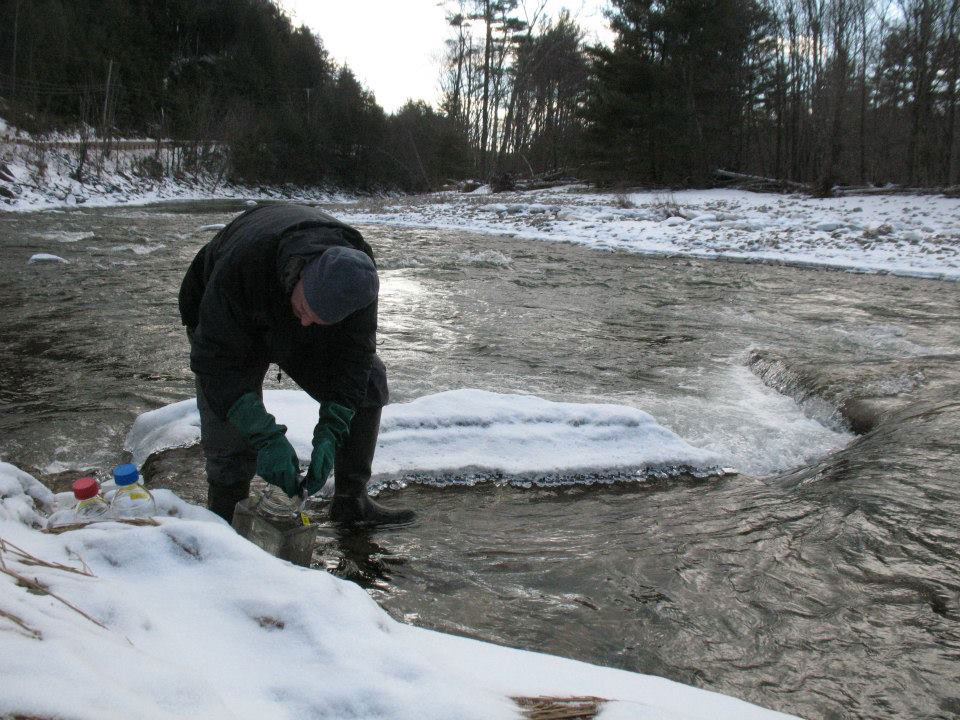
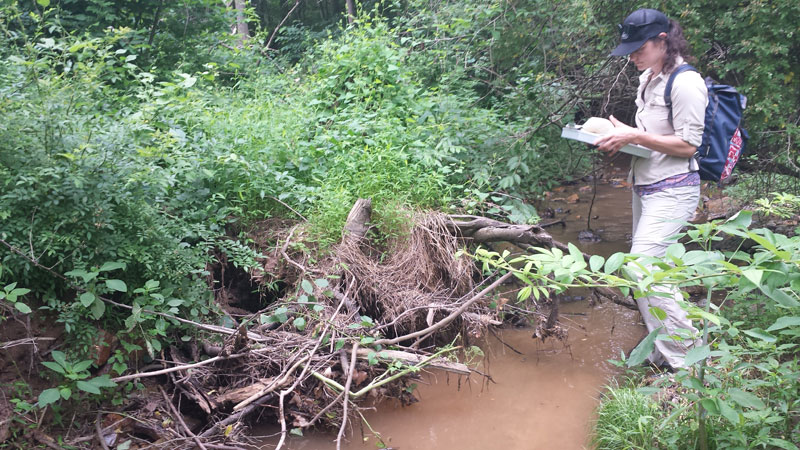
Water is found in many places beyond stream channels throughout the watershed. Streamwater, groundwater, soil water, and water in sediments below the channel contain a rich array of organic carbon molecules important as food for microorganisms and as resources for other living things.
This laboratory works on identifying the presence of these molecules and determining their role in the stream ecosystem.
Department listing
Dr. Louis A. Kaplan, Senior Research Scientist Profile | Email
Michael D. Gentile, Research Technician Profile | Email
Sherman L. Roberts, Research Technician Profile | Email
Chris McLaughlin, Ph.D. candidate, University of Pennsylvania Profile | Email

Michael D. Gentile
Research Technician, 1997 to present
Education: BS in Chemistry, University of Delaware, 1996
Mike runs the analytical chemistry section of our laboratory including operation and maintenance of: Dionex ICS3000 for analyses of carbohydrates, organic acids, anions, cations, and nutrients; Sievers 900 and 800 analyzers for the measurements of dissolved organic carbon; OI 1010 TOC analyzer and Thermo-Finnigan DeltaPlus XP Isotope Ratio Mass Spectrometer (IRMS) for the measurement of 13C-DOC; Agilent 1100 series High Pressure Liquid Chromatograph (HPLC) for the measurement of amino acids. Mike also assists with field sampling, sample processing, and bioreactor operations. He speaks Spanish and has been the primary technician for studies in Costa Rica and Peru.

Sherman L. Roberts
Research Technician, 1972 to present
Education: Graduated Upper Darby High School, 1971
Sherman is responsible for general laboratory operations and maintenance of our biofilm reactor room. He is skilled in sterile techniques for microbiology and bright field epifluorescence microscopy as well as logistical planning for research at the Center and in the field. Sherman assists in design, implementation and execution of laboratory and field experiments, field sampling, sample processing, operating analytical instruments and the supervision of interns.

Chris McLaughlin
University of Pennsylvania, Department of Biology: Ecology and Evolutionary Biology Graduate Group, Ph.D. Candidate, 2007 to present
Education: BS in Environmental Science, Virginia Tech, 2001. MS in Biology, Arizona State University, 2003
DOC in surface water provides stream microbial heterotrophs with energy. However, low concentrations of nitrogen can limit heterotrophic metabolism. Both DOC and N in stream water are a product of natural and anthropogenic sources in the watershed and the supply is controlled by the movement of water through the adjacent terrestrial ecosystem. My research interests focus on biogeochemical cycling of C and N and the effects of anthropogenic disturbances on aquatic ecosystems. More specifically, the main objective of my dissertation work will be to describe how changes in water flow paths as a result of stream restoration affect the relationship between DOC and N dynamics.