Gone Fishin’: Evaluating the Threat of Agricultural Contaminants in the Río Sierpe
The Magic of Revealing the Mysteries of Metaecosystems
By Diane Huskinson
ABRACADABRA
“Any sufficiently advanced technology is indistinguishable from magic.” — Sir Arthur Charles Clarke, Author and Inventor
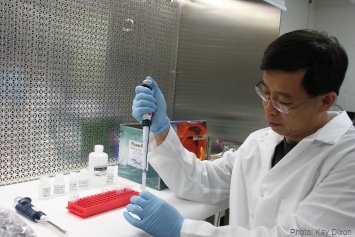
In a long white lab coat, wearing pale blue, translucent medical gloves, Jinjun Kan sits at what’s called a clean bench. The scene is stark, white, sterile. To prevent his samples from being contaminated, Kan has already disinfected the bench’s tabletop. Like a magician about to make his assistant disappear, he pulls down a screen over the opening of the work area. With the flip of a UV light switch, presto chango, the microorganisms inside are gone, or rather, dead. For his next trick, Kan gathers a set of 12 stream sediment samples containing microorganisms from which he will extract those mysterious double-stranded genetic coding materials of all life — DNA.
His work is part of a new study funded through a grant from the National Science Foundation (NSF).
THE HISTORY BEHIND THE SCIENCE
Using cutting-edge technologies, Stroud Center scientists Lou Kaplan and Jinjun Kan in collaboration with Robert Findlay of University of Alabama and Jen Mosher, who will join the Stroud Center staff when she leaves Oak Ridge National Laboratory in early 2012, are building on the scientific theories set forth in the River Continuum Concept (RCC), the idea that a river is not a static body of water but rather a dynamic flow of ecosystems that varies throughout a river’s course.
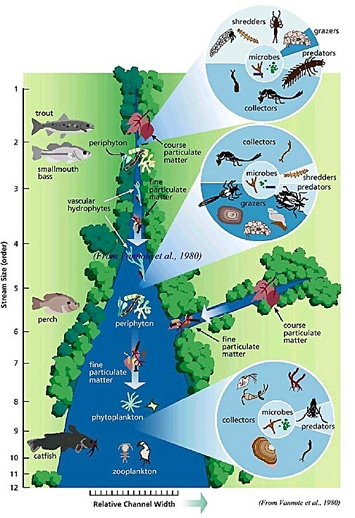
It was the RCC that initially brought worldwide attention to the work being done at Stroud™ Water Research Center.
Robin L. Vannote and some of his fellow researchers published the RCC in 1980, forming a new foundation for river studies that is still applicable today. Vannote, who was the director of the Center at the time, and his colleagues recognized that downstream aquatic communities are linked to those that exist upstream. Much like how the human digestive system breaks down food — first in the mouth through chewing, then through the esophagus to the stomach and then the intestines for further processing and absorption of nutrients — a river’s aquatic microbial communities in the headwaters begin to process dissolved organic matter (DOM), organic chemicals that dissolve out of leaves or algae or are excreted by organisms into stream water, using some of the molecules while other molecules “escape” downstream. According to the RCC, downstream aquatic communities are specially adapted to exploit inefficiencies in their upstream counterparts.
The model was ahead of its time, and in fact, until recently, its predictions concerning DOM molecules and species of bacteria couldn’t even be fully tested. The technology to do so was simply lacking.
But a little something — or perhaps more accurately, a big explosion of information centered around things so small they can’t be seen with the naked eye — called the molecular revolutions in microbiology and geochemistry have yielded new and improved tools like the simple molecule DNA sequencer and ultrahigh-resolution mass spectrometer. Kaplan says, “There’s very few of these mass spectrometers in the world. We’re talking a million-dollar instrument, but the National Science Foundation provides community access to one through Florida State University [at the National NSF High-Field FT-ICR Mass Spectrometry Facility].” And thanks to the University of Delaware Biotechnology Institute, they’ll also have access to a high-throughput DNA sequencer that will reveal the identity of bacterial species. Together they’ll work to detect the composition of a broad spectrum of DOM molecules and the communities of bacterial species that use the DOM as a food resource through entire river networks.
MAGIC IN THE MAKING
Detecting molecules will play an integral role in the research team’s study of the quality and quantity of DOM that serves as a food source for the quadrillions of microorganisms that live in streams and rivers. The scientists want to know what is the influence of DOM on the structure and function of the communities of microorganisms.
To find out, they’ll employ a natural tracer: 13C. Short for carbon 13, it’s one of only two stable carbon isotopes that exist in nature. Carbon 12 (12C) accounts for 99 percent of carbon in the atmosphere of Earth. The remaining 1 percent is 13C. Labeling DOM with the much less common 13C is like planting a tracking device: it can be traced to see which microorganisms process what and to what extent. The process is called stable isotope probing, and it’s another hot trend in the world of microbial ecology.
Microorganisms comprise most of the genetic biodiversity on Earth, so understanding microbial community structure is an important aspect of understanding how ecosystems function, and that’s why the Education Department at the Stroud Center is working closely with the scientists to interpret results to the general public and develop educational materials for K-12 teachers and students. Yet studies within freshwater habitats have lagged behind studies of marine and soil communities and have focused primarily on the plankton or seston suspended in the water in lakes or large rivers. Few studies have been done on the communities that make up the freshwater biofilms found on rocks and sand grains at the bottom of streams and rivers, and those that have done so have relied on technologies that were limited in their ability to detect rare or small populations.
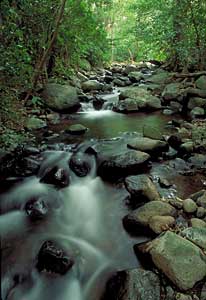
Kan explains that the traditional method of identifying microorganisms through culture captures a small percentage, fewer than 1 percent, of the existing populations within a given stream, but advancements in both technology and knowledge now allow them to extract the DNA from the bacterial cells and characterize microorganisms at the species level.
“All the prior knowledge was based on the ability to grow organisms in culture. Some organisms are fastidious, and knowing how to culture them is an art,” says Kaplan.
Working from three forested headwater stream ecosystems — White Clay Creek (WCC) in the Pennsylvania Piedmont, Río Tempisquito in the Cordillera de Guanacaste of Costa Rica, and the Neversink River in the Catskill Mountains of New York — the research team will now be able to detect and analyze those rare populations, and more common ones too, as well as the DOM that they hypothesize is linked to the upstream-downstream variations in aquatic communities.
While recent advancements have opened the door for the researchers to explore new scientific territory, earlier studies at the Stroud Center have led them to this point. Stroud Center scientists have worked in each of these waters before, and their experience continues to foster a deeper understanding of freshwater systems. So often it seems that a bright idea comes out of nowhere like a light switch that is suddenly flipped on; it’s easy to forget the electrical engineer who installed the wiring. Stroud Center science is all about the wires.
“The River Continuum Concept was based on decades of studying streams,” says Kaplan.
Hot on the trail that led to the RCC, the team expects to both challenge but mostly confirm its predictions. Chief among the challenges relates to the question of where diversity peaks in a stream. The RCC predicts that the diversity of soluble organic compounds is at its highest in first-order streams, the first and smallest in a stream hierarchy of 12 orders, and declines sharply thereafter, especially in third-order streams, but researchers now think that DOM diversity is high throughout an entire river network and perhaps doesn’t peak until midorder reaches.
Other key questions will be: Does the composition of DOM display longitudinal trends across stream orders throughout river networks? Do the spatial distributions of bacterial populations display longitudinal trends across stream orders throughout river networks? And does DOM molecular composition structure the composition and function of communities of heterotrophic bacteria, that is, bacteria that must take in and digest food to survive? The predicted answers: yes to all three.
“The invisible world in stream ecosystems that includes communities with thousands of different species of microorganisms which compete for food in the form of 10,000 different organic compounds is fascinating,” says Kaplan. “That invisible world profoundly affects our daily lives, and we are excited by this opportunity to explore its beauty and complexity.”
March of the Ancient Vertebrates
Eels and Lampreys in White Clay Creek, and the Technologies to Understand Them
By Jamie Blaine
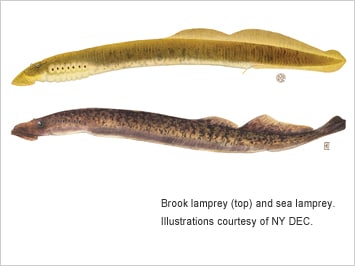
Lampreys are not eels. That fact needs to be made clear at the outset because most people think they are — including this writer before he was set straight in a recent interview by William H. Eldridge, Ph.D., head of the Stroud™ Water Research Center’s Fish Molecular Ecology Group.
Indeed, eels and lampreys represent entirely separate families of the animal kingdom with vastly different evolutionary and life histories. Lampreys are the oldest vertebrates on Earth and have existed essentially unchanged for more than 400 million years. Eels have been around only for the past 60 million years or so. There are both freshwater and saltwater species of lamprey: brook lampreys live entirely in fresh water, while sea lampreys are born in streams, and most (but not all) of them subsequently make their way to the ocean. All Atlantic eels spawn in the Sargasso Sea, from which they disperse to streams and rivers in Europe and the Americas where they spend most of their lives.
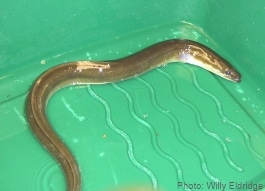
One thing eels and lampreys do have in common, however, is that they live in large numbers in White Clay Creek. Both the American brook lamprey and the sea lamprey can be found there, as can the only species of eel that exists on the East Coast. Scientists have long known that brook lampreys live in the White Clay. But no one knew that sea lampreys (which are virtually indistinguishable from brook lampreys for most of their lives) were also there — until a couple of years ago when Willy Eldridge established their presence with the help of a pioneering technology. A second technological innovation is enabling him to expand his understanding of the roles that both eels and lampreys play in the ecosystem of the stream and its watershed. The two new technologies, which are behind these and other breakthroughs in scientific knowledge, have deceptively simple names: Barcodes and EZ Pass.
EZ Pass
“Eels are the coolest fish in White Clay Creek,” said Eldridge early in our conversation, and soon he was talking animatedly about this “mysterious and economically important fish” that lives in streams and rivers from Canada to Central America and travels thousands of miles to the Sargasso Sea to spawn. The larvae then ride the Gulf Stream west for a year or more, undergoing at least two metamorphoses along the way. Most of the young eels ultimately peel off into streams up and down the coast — where they live entirely in fresh water until, several years later, they return to their birthplace to give birth and die.
Eels are an important source of both aquatic diversity and human food. Yet, despite people’s fascination with their origins in the Sargasso Sea, they have received surprisingly sparse attention from the scientific world. Consequently, little is known about their numbers and activities or the roles they play in a stream’s ecosystem. (In fact, there was much historical debate about whether eels were even fish until Carol Mondini, an Italian scientist, found their gonads in 1777. Ninety-nine years later, in an effort to understand their life cycle, a young Austrian medical student spent several weeks dissecting hundreds of eels in a vain search for their male sex organs. In the first published paper of his career, Sigmund Freud conceded that he had been unable to find them and decided to focus on other things.)
Because so much about eels remains unknown, there are few effective conservation and management policies in place to protect them. In recent years, in response to an observed decline in eel numbers in the Delaware River watershed, a movement arose to have them listed under the Endangered Species Act. But eels are panmictic — that is, they constitute a single population across a vast geographic range, mate indiscriminately, and disperse randomly from the Sargasso Sea. Consequently, their movements transcend the boundaries of political planning units, and scientists have had a hard time understanding their distribution, behavior, and activities with much precision. As a result, the petition failed.
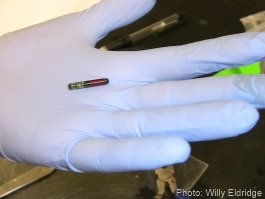
To monitor the activities of eels in White Clay Creek, Eldridge has issued them EZ passes — small glass-encased capsules that he inserts into their abdomens — which give each fish a unique code that can be read by antennae that will be located at nine sites along the creek. This allows researchers to follow the movements of eels up- and downstream, as each antenna records their position in real time, much as the EZ pass system tracks individual cars on the Pennsylvania Turnpike.
The EZ Pass — or Passive Integrated Transponder — allows Eldridge to study the activities of individual fish, something that had been impossible when he could only track populations in the aggregate. As a result, he will be able to pinpoint life histories and to analyze the consequences of short- and long-term movements in the stream. For the first time, researchers will know what individual fish are doing in particular places over recorded time, knowledge that will enable them to more fully understand the dynamics of the life cycles of eels and their responses to environmental stresses and human impacts.
Barcodes
How Eldridge discovered that sea lampreys were in the stream at all is the result of a second technological innovation, this one a revolution in molecular genetics. The process, called barcoding, enables researchers to determine an organism’s species from a microscopic sample of its DNA that carries a unique sequence of genes — much the way each product in a grocery store has its own unduplicated barcode. With the help of this new technology, Eldridge has to date identified 24 species of fish in White Clay Creek, including eels and both species of lamprey.
One of the questions he is asking is how the fish get up the creek in the first place, since seven dams lie between the source of the White Clay and the Delaware estuary. Sea lampreys are anadromous — like salmon, they reproduce in fresh water, and most of their progeny ultimately make their way downstream to the sea. Eels are catadromous — after spawning in the Sargasso Sea, they spend most of their lives in fresh water. The dams present no small obstacle both to fish trying to get up the White Clay and those trying to get down, and Eldridge is trying to determine how they do so.
Here’s what he does know: eels can walk on land by absorbing oxygen from the air for short periods of time, while lampreys latch onto rocks with their suction-cup mouths. In fact, the etymological root of the word lamprey is “stone licker,” a phrase that undoubtedly adds little to the fish’s human appeal. Imagine, then, an improbable parade of lampreys executing gymnastic mouth flips from rock to rock, while eels are actually getting out of the water and walking around the dams. Sometimes the natural world can rival any circus.
Mostly it’s a nocturnal march, for eels travel only at night — a characteristic that serendipitously helped researchers answer a completely unrelated question from another major research project. In their work on the Critical Zone Observatory, the multiyear collaboration with the University of Delaware focused on climate change, Center scientists noted nightly spikes in stream turbidity that they could not explain. It turned out to be caused by eels, who were churning the water every night as they searched the stream bottoms for food.
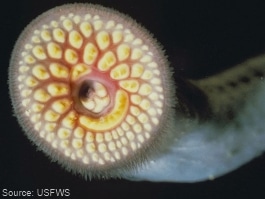
Unlike with eels, scientists have showered attention on sea lampreys, primarily with the aim of exterminating them in the Great Lakes, where they have been mauling other fish for almost a century. In their adult stage, sea lampreys are large and aggressive parasites who use their mouths filled with concentric rings of teeth — and a tongue that is well supplied with teeth of its own — to latch onto other fish and suck out their blood and body fluids. But brook lampreys are not parasites at all, and sea lampreys are not the vicious predators in stream habitats that they are in the ocean. In fact, both brook and sea lampreys spend most of their lives as immature ammocoetes, feeding on organic matter they filter through their mouths. It is only near the end of their lives that adult sea lampreys swim to the ocean, and it is there, and in large harbors and the Great Lakes, that they have earned their reputation as “nature’s vampires.”
There remains much to learn about eels and lampreys in White Clay Creek. The eel population, long a source of a thriving commercial food industry along the Delaware River and an important part of the White Clay ecosystem, continues to decline. While eels have clearly been overfished, both for bait and to provide food for Asian markets, scientists still don’t fully comprehend the impact on the eel and lamprey populations of pollution, sedimentation, or sudden changes in temperature or water levels. Equipped with barcodes and EZ pass technology, Willy Eldridge is determined to change that.
Scientists Tour the Critical Zone Observatories at Fair Hill and Stroud™ Water Research Center
By David Yeats-Thomas
Local bow hunters and about 80 water research scientists from Europe, North America, China, and Australia were among the few humans braving the woods of the 565-square-mile Christina River watershed on a damp and chilly morning November 10.
The scientists were there to learn about the operations of one of the world’s handful of Critical Zone Observatories (CZOs). The hunters, meanwhile, must have wondered what all the fuss was about. They’d most likely seen all the odd looking devices along and in some of the White Clay Creek’s myriad of tiny streams, which rise in Pennsylvania and flow into Delaware and the Christina River.
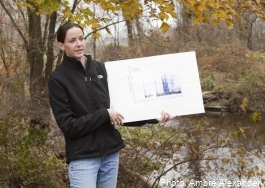
But if the hunters had joined the tour they would have discovered from the scientists and young graduate students who were manning the various stations that the instruments are monitoring the “critical zone.” The complex natural processes that happen in this zone — from the bottom of the aquifers to the tree tops — are responsible for sustaining life on Earth. And the scientists are seeking to understand them through the CZOs.
The watershed field tour was on the third and final day of a conference for CZO researchers, which started with a series of workshops held at the University of Delaware’s Clayton Hall. The Christina River Basin CZO, a collaboration of the Stroud™ Water Research Center and the University of Delaware funded by a $4.3 million National Science Foundation grant, is one of only six such observatories in the U.S. Europe has four CZOs, which are funded by the European Commission. France, China, and Australia are each establishing CZOs, and the objective of the workshop was to develop networks to coordinate science between all CZOs.
The conference delegates started their bus tour in the morning with a stop at the Fair Hill Natural Resource Management Area, a 12-hectare headwater catchment CZO satellite site. The visitors divided into four groups and proceeded into the woods, which were ankle deep in fall leaves. Along some of the streams, four monitoring stations manned by University of Delaware and Stroud Water Research Center researchers involved in the project were set up to demonstrate and explain their research to the visitors.
Next stop was the Stroud Water Research Center — after a quick drop-in to look at the London Grove Meeting’s giant Penn Oak, whose ground was assumed not to have been disturbed for at least four centuries, the estimated age of the tree.
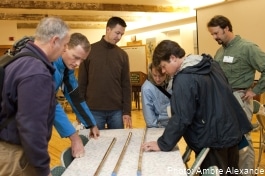
After coffee and doughnuts in the Stroud Center’s Meetinghouse, the conference delegates again divided into four groups to visit the half-dozen stations set up at various points along the stream that flows next to and partly through the Center.
The groups were led by Stroud staff members, and at each station, one or two CZO researchers would explain the various critical zone processes they were monitoring.
For the Stroud Water Research Center, monitoring the streams and ground water was the reason for its founding in 1967, and it’s been doing this ever since. What’s new is the development of wireless sensor technology for continuously collecting data throughout the watershed. Until recently, scientists would need to hike out with a backpack full of bottles and return for days of laboratory measurements. New technologies have the promise of enabling researchers to remotely collect data every few minutes or automatically fill bottles during precisely the right moments, which often occur at night and during big storms. Which is why the Stroud Center now has an electrical engineer, Shannon Hicks, on staff — hired with the help of the NSF funding for the CZO.
Hicks was staffing one of the Stroud Center’s stations. On her table at the pump house just below the Stroud Center’s new building, Hicks had laid out a plethora of gadgets, electronic boards, cell phones, and waterproof boxes.
“What we’re doing here is what every environmental scientist wants to do,” she said, speaking fast because group leader Dave Montgomery was keeping a strict watch on the time allowed for each stop. “We put down a lot of sensors so we can see what’s going on in the watershed.”
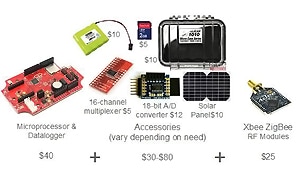
She said that some of the name-brand equipment can be bought assembled and ready to use. At a fraction of the price, however, the devices can be assembled from parts developed by the exploding open-source electronics movement, sensors sold directly from original equipment manufacturers, and even used items found on eBay.
“So for less than $100,” she said, she can put together a data logging system that would cost at least $1,800 if bought as a name-brand device. Since there were so many stream sites and wells to monitor, it would be unfeasible and uneconomic to use the manufactured devices, she said.
But “for $10 I can do the same thing here as $600 over there,” she said pointing to various gadgets. “We pay 50 bucks for what would normally be $2,500.”
Hicks demonstrated how to install a $5 cell phone that can be activated for a $5 monthly service fee and attached to the device so that researchers can monitor and instruct remotely.
She discussed installing special chips so that devices can be controlled from a cell phone to do operations like filling a barrel and sending back data. The remote device would, in turn, respond by voice, somewhat like the new iPhone’s Siri.
“You can put one of these boxes anywhere [in the watershed] as long as there’s cell phone coverage,” she said. “And this whole thing cost less than $100.”
Some visitors expressed skepticism about how easy Hicks said the gadgets were to build. Hicks disagreed. “This [open-source] platform is made for people who are not electrical engineers. The programming is easy,” she said, adding that you just plug it in and push a button. “It’s not complicated,” she said as her audience laughed, still doubtful. “We’re going to make these as easy as possible for others to replicate. You buy the parts, snap them together, and they’re ready to go.”
Read more about the open-source electronics being used at the Stroud Center.
Model My Watershed® Reaches Students and Teachers
By Diane Huskinson
Since we first introduced Model My Watershed® to Upstream Newsletter readers in the fall of 2009 (read “Model My Watershed®: An Innovative Approach to Teaching Environmental Science”), educators at the Stroud™ Water Research Center have reached many new milestones with this innovative project.
The goal was ambitious — to develop an interactive Web tool that enables students to learn about their watershed and the impacts of land use on water quality and the environment; to engage students in the STEM disciplines and get them excited about related careers; to make the tool applicable in regions throughout the United States; and of course, to make it fun for students to use.
When Susan Gill, the Stroud Center’s director of education and public programs, proposed the idea to program officers from the National Science Foundation (NSF), they doubted whether it could be done. It just seemed too good to be true. Yet they believed in it enough to award the Stroud Center a three-year grant.
Now, nearly three years later, what started as a bright idea has unfolded into a real and relevant teaching tool.
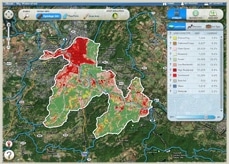
Azavea, Inc. has designed the interactive Web tool’s interface to use geographic information systems technology (GIS) with GoogleEarth. Michele C. Adams and Steve Benz, both LEED-certified civil engineers, have developed the hydrologic modeling algorithms.
The result: a dynamic, videogame-like experience that lets students digitally modify land use in their own neighborhoods to examine how urban development or best management practices (BMPs) can affect water quality, flooding, and stormwater runoff. Through the project website, students will eventually interact with STEM professionals via webcasts, videos, and online chat.
Not only is the model done, but students and teachers from local schools in the Schuylkill River and Susquehanna River watersheds are getting the opportunity to test it and provide feedback.
“This application takes real-life decisions into the classroom and allows students to make decisions based on real science,” says Matt Copper, a teacher at Lempeter-Strasburg High School.
The teachers aren’t the only ones who are impressed. Gill has been busy attending meetings on both sides of the country, presenting the project at the American Association for the Advancement of Science Meeting, the Innovative Technology Experiences for Students and Teachers Summit, and the Conference on Cyberlearning Tools for STEM Education. The project was highly praised everywhere she went.
It was also one of two projects developed by Stroud Center scientists and educators to be featured alongside 31 exemplary resources at NSF’s STEM Smart: Lessons Learned From Successful Schools at Drexel University. Among those present were Rep. Chakka Fattah (D-Pa.), Dr. Subra Suresh, director of the NSF, and Mayor Michael Nutter of Philadelphia.
Most recently, Gill, Nanette Marcum-Dietrich of Millersville University, and Carolyn Staudt of the Concord Consortium, traveled to Washington D.C., where NSF program officers encouraged them to apply for two new grants, one for middle school students and one for high school students, to expand the pilot project beyond southeastern Pennsylvania. If awarded these grants, the Stroud Center could bring Model My Watershed® to students and teachers in Virginia, Kansas, Iowa, Alaska, California, and more areas in Pennsylvania through a partnership with the Concord Consortium, a nonprofit educational technology laboratory for science, mathematics, and engineering.
“I couldn’t be more pleased,” says Gill. “We are continuing to move forward, and I’m excited to see the tool reach classrooms and do everything we had hoped it would.”
Events
The Water’s Edge: An Evening in Review
By Diane Huskinson
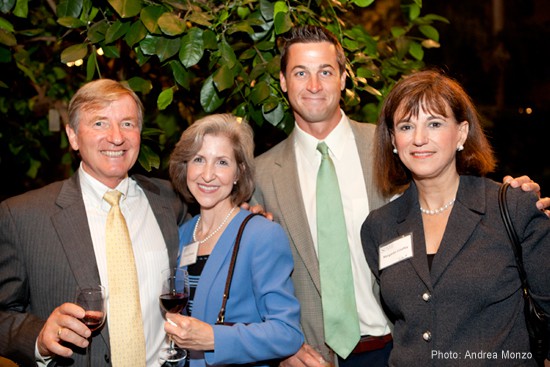
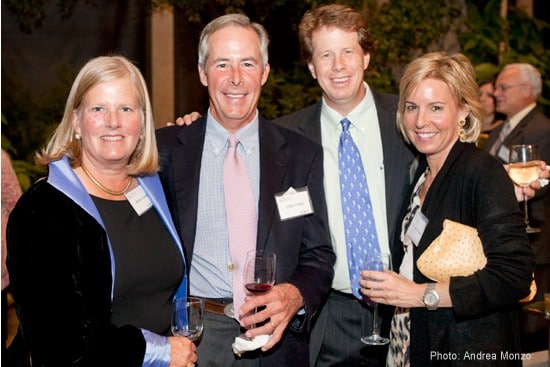
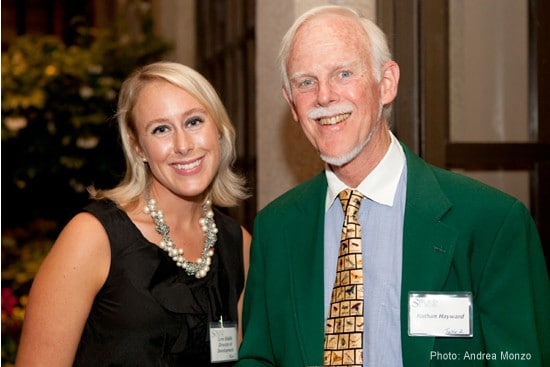
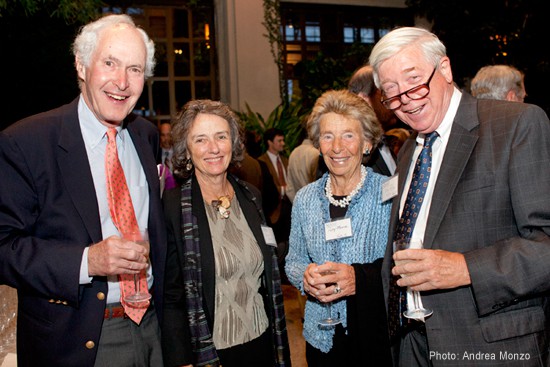
Among colorful displays of lavender orchids, Chinese hibiscus in lemon and burnt orange, lollipop plants, and towering ferns, over 200 guests came together on Tuesday, October 11 to support the Stroud™ Water Research Center and celebrate its main focus, fresh water.
Longwood Gardens once again served as the beautiful backdrop for the Center’s annual fundraising gala, The Water’s Edge. A series of enchanting, secret-like passages bursting with foliage and floral blooms led guests to the Main Conservatory and Exhibition Hall. Inside this majestic glass greenhouse, they enjoyed an evening of fine food and fresh ideas.
In the past, The Water’s Edge has featured some of the world’s most sought-after speakers — like Peter Gleick and Jane Goodall — to share their views on the importance of fresh water. This year, Dr. Bern Sweeney, director of the Stroud Water Research Center, shared what’s happening with many of the exciting projects underway at the Stroud Center, including Leaf Pack, and presented the first ever Stroud Award for Freshwater Excellence™, also known as the SAFE Water Award™.
A MOMENTOUS OCCASION
Just hours before the event, Stroud Water Research Center had initiated memorandums of understanding (MOUs) with the National Wildlife Federation (NWF) and the Amazon Center for Environmental Education and Research Foundation (ACEER). The MOUs set a plan in motion to further expand and market Stroud’s Leaf Pack Experiment Kit as a teaching and water-quality assessment tool in schools in North America, Latin America, and beyond.
“Tonight is really a celebration of Leaf Pack,” said Sweeney. Indeed, this simple yet ingenious tool that was first pioneered by Stroud scientists over four decades ago is giving students, teachers, and communities the ability to inexpensively monitor the health of their streams and rivers. Students learn about water science and ecology. Communities and policymakers can make more informed decisions that impact water quality.
“In the same way that streams and rivers are part of a larger watershed,” Sweeney later explained, “the relationships we’re building with NWF and ACEER work to complete the big picture. We have common goals and unique talents.”
NWF is America’s largest conservation organization with over 4 million supporters. It has been working to protect and restore wildlife habitat, confront global warming, and connect people with nature for decades.
ACEER specializes in rainforest conservation and community education in the Peruvian Amazon.
“When you couple those individual strengths with the innovative science, research, and education Stroud brings to the table, you have a powerful team of players making our world a little bit better,” he added.
Larry Schweiger, president and chief executive officer of NWF, and Roger Mustalish, president of ACEER, were present when Sweeney made the joyous announcement.
Mustalish commented, “We were floored by the elegant simplicity of Leaf Pack. To bring Leaf Pack to the Amazon and watch people learn about their environment in an entirely experiential way is really transformative.”
That transformative power was evident during recent Leaf Pack workshops in rural areas surrounding the towns of Pucallpa and Iquitos in Peru. When villagers discovered bugs in their leaf packs, they thought it was a sign the water was dirty, and they admitted they sometimes poison the bugs. It was a teaching moment. Center scientists know there are many bug species that are indicators of clean water.
“To the extent that we can carry the message to South America, we’re thrilled to do that. It’s quite an honor,” Mustalish said.
STROUD AWARD FOR FRESHWATER EXCELLENCE
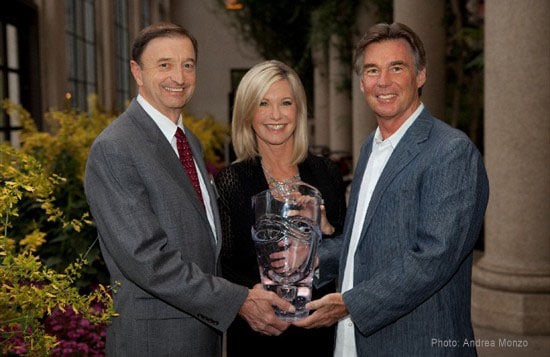
Also present were ACEER board members and recipients of the Stroud Award for Freshwater Excellence Olivia Newton-John and her husband, John Easterling. The award is given to those of outstanding achievement who contribute broadly to the conservation and protection of fresh water. The couple was chosen for their unwavering commitment to rainforest conservation in the Amazon River basin.
“As individuals, they are both deserving of this award, but as a team they are especially strong and set a terrific example for all of us as to how much we can accomplish,” Sweeney announced.
Together they have embraced the Amazon and its people. Easterling, also known as Amazon John, has also started the Amazon Herb Company, which makes products from the natural ingredients found in the Amazon rainforest and provides support to many indigenous communities in the Amazon. Some fruit of that labor of love, the drink Zamu, was served as a special treat to guests that evening.
As everyone dined under a soft nighttime glow and beneath colorful parasols suspended from the ceiling, Sweeney presented the couple with an exquisite handcrafted SAFE sculpture. Simon Pearce Inc. specially designed and created the glass sculpture to resemble the flow of water.
Winden Rowe was a guest and had this to say: “Tonight has been enlightening and motivating. Learning more about the impact that Stroud, ACEER, NWF, and people like Olivia and John are making to benefit our local and global communities is exciting. I’m so glad I came and am part of such an incredible event.”
The Water’s Edge was made possible by generous sponsorships from premiere sponsor Dansko Inc.; full-table sponsors Curran Foundation, DuPont Company, Exelon, Marilyn and Nathan Hayward, John Lazarich Foundation, Alice and Rod Moorhead, Wilmington Trust, and Diana and Bill Wister; half-table sponsors Franny and Franny Abbott, Glenmede, Merrill Lynch, NewSpring Capital, and Barbie and Jerry Riegel; young friends table sponsors Jock Hannum, Anne Stroud, and Mayra and Steve Stroud; and event sponsors Yeda and Dave Arscott, Hankin Group, Moira and Ken Mumma, Longwood Gardens, and Wild Thyme.



How to Cultivate a More Livable Landscape
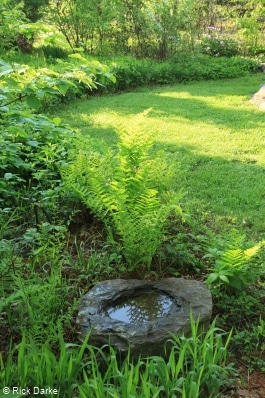
Want to learn how you can reduce the human footprint on your own bit of Earth? Stroud™ Water Research Center and Longwood Gardens are hosting a series of National Science Foundation (NSF)–funded lectures, “Livable Landscapes: Cultivating an Ecosystem Esthetic,” at Longwood Gardens.
The lectures are designed to promote an ecosystem esthetic in which landscape decisions are informed by scientific advances in the carbon and hydrologic cycles and influenced by esthetically compelling designs. Among the speakers from throughout the region will be noted photographer, author, and livable landscape consultant Rick Darke and the Center’s Senior Research Scientist Lou Kaplan.
Beginning in January and running through March, topics will include “The Science Behind Your Livable Landscape,” “Towards Regenerative Design: A New Paradigm for Site Development and Landscapes,” “Looking at Your Livable Landscape,” “Living Buildings for Livable Landscapes.”
Networking and dessert to follow each lecture. Cost per lecture is $13 for garden pass members; $15 for nonmembers. Attend all four lectures for $45 (members) or $50 (nonmembers).
In the News
Insects a Top Water Quality Assessment Tool
Dr. John Jackson of the Stroud Center explained the importance of insects, especially mayflies, in evaluating water quality during an interview with Virginia Cody. Cody is a staff writer for The Times-Tribune who met up with Jackson at Riverside Park along the Susquehanna River to find out how the Stroud Center is determining whether the Procter & Gamble plant upstream might be impacting the health of the river. Read the article
Stroud Center Provides Solid Science to Public and Policymakers
Total maximum daily loads (TMDLs) have become a recent hot-button issue since the recent policy proposal that would give the Environmental Protection Agency (EPA) and Army Corps of Engineers the ability to regulate pollutants discharged into streams. The agencies claim that without that authority, they can’t control the quality of drinking water for 117 million Americans.
Brian Bowling, a Pittsburgh Tribune-Review staff writer, interviewed debaters on both sides of the fence in his article “Small Streams, Big Impact: Agency Wants Oversight.” Dr. Lou Kaplan, a senior research scientist at the Stroud Water Research Center, provided an explanation of how changes to small headwater streams can add up.
Scientists Collect Climate Change Data From Irene Flooding
EarthSky was just one of many news media to report on the scientists from the Stroud Center and the University of Delaware who braved Hurricane Irene to collect floodwater. It was a rare opportunity for the scientists to learn more about climate change and water quality because, as Stroud Center scientist Dr. Anthony Aufdenkampe explained, a big storm event like Irene is a major player in the global cycling of greenhouse gases.
Read EarthSky’s article | Read the National Science Foundation press release
Stroud™ Scientists & Educators Present
Our ability to disseminate our findings to a broad audience allows us to increase awareness and create a public dialogue centered on the protection, preservation, and restoration of watersheds everywhere. It’s for that reason that our scientists and educators engage in both scientific and public forums to share their findings. The following highlights recent presentations.
SCIENTISTS SHARE STROUD™ STUDIES ON FISH AND INVERTEBRATE RESPONSES TO TEMPERATURE CHANGE AT THERMAL ECOLOGY AND REGULATION WORKSHOP
The temperature controlled experimental aquariums facility at the Stroud Center.
In October, Willy Eldridge, Ph.D., and John Jackson, Ph.D., traveled to Maple Grove, Minnesota to attend the Third Thermal Ecology and Regulation Workshop. Both Eldridge and Jackson delivered oral presentations on their research on the influence of the rate of water temperature change on fish and aquatic macroinvertebrates.
Gradual temperature change can have a stimulating effect on fish and invertebrates, but rapid temperature change can lead to thermal shock and death. Eldridge presented data from an investigation examining what rate of temperature change induces a sublethal response in fish. Jackson presented results from a parallel study on aquatic macroinvertebrate responses in laboratory simulations of thermal effluents from power plants.
STROUD™ SCIENTISTS TRAVEL TO PRAGUE TO PRESENT FINDINGS AT THE 21ST ANNUAL GOLDSCHMIDT CONFERENCE
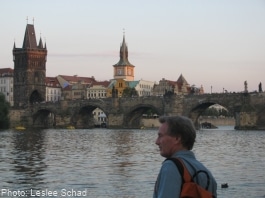
Lou Kaplan, Ph.D., and Olesya Lazareva, Ph.D., travelled to the Czech Republic to participate in the 21st Annual Goldschmidt Conference. The Prague meeting was the largest ever Goldschmidt conference with over 3,700 lecture and poster contributions.
The conference theme focused on exploring the planet with physical and chemical tools, including the measurement of low-temperature geochemistry reactions important to life on Earth.
Kaplan presented his pioneering work with Stroud™ colleagues Denis Newbold and Anthony Aufdenkampe on labeling dissolved organic carbon (DOC) derived from tulip poplar with a 13C isotope to trace the contribution of this terrestrially derived DOC to stream ecosystem metabolism.
Lazareva, a postdoc with the National Science Foundation (NSF)–funded Christina River Basin Critical Zone Observatory (CRB-CZO) at the University of Delaware and Stroud Water Research Center, presented a poster describing the influence of iron and manganese on the carbon cycle in soils in the Christina River Basin.
PENNSYLVANIA WATERSHED SPECIALISTS LEARN TO BUILD ENVIRONMENTAL SENSOR NETWORKS
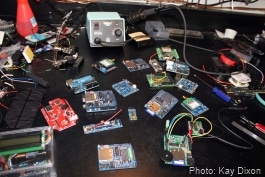
Anthony Aufdenkampe, Ph.D., and Shannon Hicks of the Stroud™ Center traveled to the 11th Annual Conservation District Watershed Specialist Training Meeting in State College in October to demonstrate how emerging technologies have made building one’s own environmental sensor network a reality. Aufdenkampe lead the workshop with an introductory seminar. He then began a sensor-building demonstration by switching to an overhead video feed of the electronics workbench. The feed showed Hicks assembling components to build environmental sensors (such as a thermistor or a redox sensor) and connecting data loggers and radio transmiters. All in all, the workshop was well received by the 58 attendees.
LEAF PACK WORKSHOPS HELD AT WILSON COLLEGE
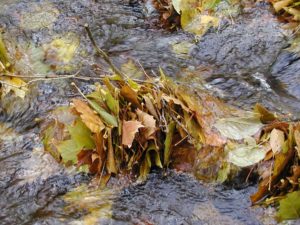
In August, Stroud Education Program Manager Christina Medved led a two-day Leaf Pack Network® workshop for 16 teachers at Wilson College, Chambersburg, Pa. The teachers learned about general stream ecology and how to sample streams using leaf packs.
As a standard evaluation technique for our programs, participants took both pretests and post-tests about their knowledge of the subject matter. Pretest scores averaged 66 percent and improved greatly to average 95 percent at the end of the workshop.
Medved also led two Leaf Pack sessions at the National Science Teacher Association’s Regional Conference in Hartford, Conn. The conference theme was “Science Inspiring Growth.” Medved reported that “out of all the conferences over the last 10 years where I’ve presented Leaf Pack, I think these two were the best attended workshops. Nearly 60 people through our workshops in one day!”
One attendee commented that it was “the most useful and most applicable workshop I attended today. Really great!”
The workshops were conducted in collaboration with and sponsored by the LaMotte Company.
WHOSE WATER IS IT, ANYWAY?
Undergraduate communication students at West Chester University and students at Cabrini College were treated in September to a seminar on water rights presented by Christina Medved. Students learned about water rights and conflicts taking place around the world. They were also introduced to a case study of the New York City water supply that described the historical perspective of how NYC obtained and built its more than 15 reservoirs and many miles of aqueducts that now provide water to more than 9 million people in the NYC metropolitan area.
Medved and Stroud Director of Education Susan Gill, Ph.D., have been co-teaching a class at Cabrini College this semester as part of their NSF-funded Creating Citizen Scientists collaboration with Cabrini College.