We All Live Downstream
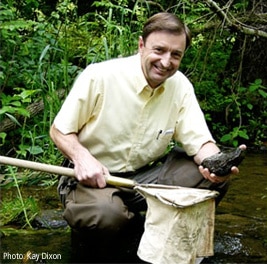
September 18th was World Water Monitoring Day — an event that probably didn’t get your attention — but should have. The intention of its organizers is to use this annual event to build awareness and get individuals like you and me involved in protecting our drinking water supplies.
It’s a noble goal, yet one that hasn’t been widely adopted — perhaps because so many of us assume that protecting our water supply is a government responsibility. While that’s true in part, the reality is that each one of us affects the quality of our drinking water — and there’s a lot we can do as individuals to protect it from harmful contaminants and pollutants. The first step is simply to become more informed.
Let’s stop for a moment to consider the path of the Delaware River, which provides the drinking water to roughly 17 million people. It’s tributaries — the streams and rivers that flow into it — might be more familiar to you. They include: the Schuylkill, the Brandywine and the Red Clay and White Clay Creeks. Its source is in New York State — yet before it meets the Atlantic Ocean, it must first pass through the states of Pennsylvania, New Jersey and Delaware.
The Delaware River literally connects the residents of hundreds of small towns and several larger cities. The people of Port Jervis, NY are directly linked with those in Easton, PA, and the people of Wilmington, DE with their upstream neighbors in Philadelphia, PA.
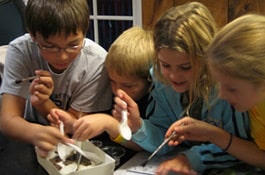
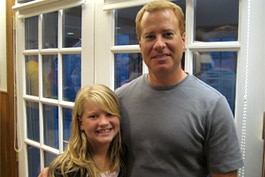
When one considers that 360-mile journey on which the Delaware The Pinto family, Mike and daughter Emily, two of the 65 community members, parents and children who came to Stroud Water Research Center to learn about water issues and commit to monitoring a local stream as part of Avon Grove Charter School’s World Water Monitoring Day events.encounters hundreds of municipal sewage treatment plants, more than one thousand approved wastewater discharges, the port of Philadelphia — and the countless accidental misdemeanors by businesses, farmers, and frankly, individuals just like you and me — it starts to really drive home the meaning of the phrase, “We all Live Downstream.”
Perhaps we’d do some good if the phrase were recast to, “We all Live Upstream.” Why? Because we alone can control our actions — and those actions affect our downstream neighbors. Were we each to consider the Golden Rule when it comes to water, “do unto others as you would have them do unto you,” we could do a lot to protect our drinking water supplies.
How you might ask? Ensure that your septic system is working properly. Conserve water in your home and garden; act as if we’re experiencing a drought everyday.
Think about what you pour down the drain, apply to your lawn and your hardtop driveway; if you wouldn’t want to drink it, would your neighbor downstream?
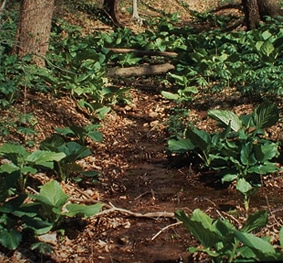
Plant a tree. In fact, plant lots of them — because research shows that they not only reduce flooding, but they also help prevent pollutants from entering our water supplies.
Understand what it costs to chemically treat and filter your water for human consumption — and that the more we foul it, the costlier that bill becomes.
Promote the ordinances and other legislation that enforce best management practices in your communities. Be part of the solution — and tell your family, your friends and neighbors to do the same.
Finally, be thankful to the too few individuals and agencies that actually do monitor our streams and rivers — the source of your drinking water and the lifeblood of our communities.
The Imperative to Protect Our Headwaters
Robin Mann was first introduced to the Stroud™ Water Research Center in the late 1970’s when pollutants from an upstream poultry operation were impacting the stream and ponds on her family’s property. Center scientists analyzed the water and recommended best management practices to mitigate the situation. In her current role as Vice President of Conservation for the Sierra Club, Mann’s interest in the Stroud Water Research Center’s findings has a much broader application — the potential to inform both local and national policy about protections afforded our nation’s freshwater sources.
Implications for the Clean Water Act
Mann’s recent focus regarding water issues relates to an historical ruling in 2001 by the U. S. Supreme Court (Rapanos et ux., et al. v. United States or “Rapanos”), which challenged the scope of the Clean Water Act, a law enacted by Congress in 1972 to help restore and protect our nation’s freshwater resources. The ruling, which limited federal jurisdiction over isolated, non-navigable, intrastate waters, was interpreted broadly by the federal agencies to narrow the scope of the Clean Water Act, and strip federal protection from many isolated wetlands and streams — integral components of our watersheds and important sources of drinking water.
Under the new policy, protections were no longer assured for millions of acres of wetlands and thousands of miles of “ephemeral washes or streams” — intermittent streams that typically flow for fewer than six months a year, as well as streams without a groundwater source. The policy change threatened to eliminate protection for a majority of the streams in the western states and a significant number of streams in Pennsylvania as well. Its modification did not account for recent scientific research that demonstrated the links between these waters and protected waters downstream.
Using Science to Protect Freshwater Resources
“We doggedly went about reversing this ruling — and being able to use the findings of the stream ecologists at the Stroud Water Research Center to make the case for the importance of headwater streams in relation to downstream water quality gave us a lot of traction,” said Mann. That initial traction was the result of a 2003 paper on small streams and wetlands co-authored by Stroud scientists entitled, Where Rivers are Born.
“The impact of this paper was huge,” says Mann. “It was and continues to be widely cited by federal agencies, including the U.S. Fish & Wildlife Service, and advocacy groups like Sierra Club, both of which rely on independent research to support their case for environmental protections.” The paper’s scientific data became a compelling educational and advocacy tool for communicating with legislators as well as the public at large.
Adding to the challenge, a 2006 ruling by the Supreme Court further limited the reach of the Clean Water Act. In the “Rapanos” case a divided Court again ruled that a headwater stream is protected under the Clean Water Act only if it has either a relatively permanent flow or a demonstrable functional link to downstream waters.
The Sierra Club and other groups are working furiously to educate the public and the Congressional delegation about the negative impacts of this ruling and what’s at stake. Headwater streams that are denied federal protection are vulnerable to pollution discharges without a permit. In the balance are waters like Avondale Creek in Alabama, polluted by the dumping of industrial waste by a manufacturer. To date, hundreds of EPA enforcement cases have been shelved because the streams in question are no longer covered by the Act.
Defining the Value of Headwater Streams
A new paper from a team of scientists at the Stroud Water Research Center, Protecting Headwaters: The Scientific Basis for Safeguarding Stream and River Ecosystems, may prove of significant value in the continued effort to strengthen protection of our freshwater resources. In this paper, based largely on 40 years of research on the White Clay Creek watershed, Stroud scientists describe the special nature of headwater streams, their critical role in stream ecosystems, their fragility and vulnerability to human disturbance, and the benefits that ensue when headwaters are protected by forested riparian buffers.
In particular, the scientists argue that headwaters:
- support a biodiversity of communities, including communities of aquatic insects and microorganisms that are selected for by the physical and chemical conditions found primarily in headwater and intermittent streams;
- provide energy that helps support life in larger downstream reaches;
- can arise as permanently flowing streams from very small watershed areas and can include ecologically important intermittent streams that flow from even smaller watershed areas;
- are integrated into landscapes, which means that the quality of their water depends on land use conditions; and
- with intact forested riparian buffers influence the processing of nutrients and contaminants.
According to Mann, this new paper provides important underpinnings for addressing policy improvements at both the federal and state levels — particularly with regard to reforming the Dam Safety and Encroachments Act Chapter 105 regulations, which regulate disturbances like ditching, filling and stream enclosures related to development. The research findings reported in this paper will play a pivotal role in educating fisheries, conservationists, environmentalists and legislators at both the state and national levels about the imperative to protect headwater streams.
Links:Downloadable copies of the scientific papers mentioned in this article can be found at the following URLs:
- Where Rivers are Born: The Scientific Imperative for Defending Small Streams and Wetlands
- Protecting Headwaters: The Scientific Basis for Safeguarding Stream and River Ecosystems
- Summary of the Clean Water Act
Stroud Educators at Work
Five Days + Seventeen People = A World of Promise
Blaine Receives Benjamin Franklin Award for Excellence
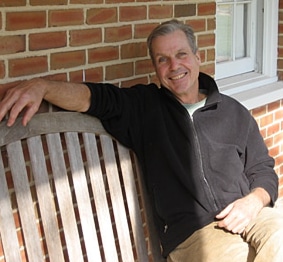
What do the Associated Press and Stroud™ Water Research Center’s own Jamie Blaine have in common? They’ve both been the recipients of the prestigious Benjamin Franklin Award for Excellence.
The award, which was presented to Blaine at the Pennsylvania Newspaper Association (PNA) Annual Dinner in Pittsburgh, PA on October 23rd, is given annually by the PNA to an organization or individual who has performed an outstanding service or accomplishment to his or her community that reflects positively on the newspaper industry of Pennsylvania. Blaine was cited for his efforts to reform the state’s open records law. Blaine isn’t one to boast of his achievements — but they are many and well worth noting.
To call him engaged would be putting it lightly. From his service as an educator of special needs children and university students, to his work on environmental issues — both here at the Center, where he served as director of education for several years and continues to contribute on many levels, to his work in the community on social and environmental issues, Blaine can only be described as a “doer.”
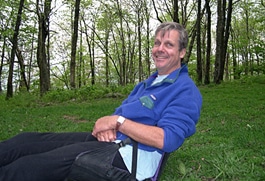
“We would not be in the position we are today without Jamie’s support and guidance,” said Bern Sweeney, director of the Stroud Water Research Center. “He’s been a backbone of the organization — providing expertise, a voice, and much inspiration to me and the rest of the staff as well. We couldn’t be more pleased with this well-deserved recognition.”
Blaine’s experience in the newspaper realm is deep. He founded and published the Kennett Paper, which was three times named Pennsylvania’s weekly Newspaper of the Year, and went on to publish eight weeklies in southeastern Pennsylvania. From 1999 to 2000, he served as PNA’s president.
Congratulations, Jamie!
Mayfly Club: Time Out with Billy Peelle, Cofounder
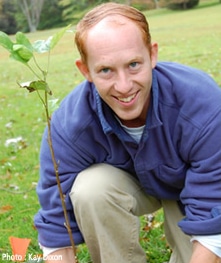
We recently sat down to chat with cofounder Billy Peelle to talk about his vision and goals for the Mayfly Club. The following is an excerpt from our discussion.
What Got You Interested in Taking an Active Role?
When I’m with my friends and family, we often talk about the future, what we wish for, and the things we want to accomplish. From an early age I guess I’ve been exposed to the research at the Center and it has given me insights and perspective that I might not have had otherwise. That exposure peaked my interest so I began to read a lot about the environment and study environmental issues in general. As I was doing this, it became pretty clear to me how important freshwater research really is and how it could potentially be overlooked given the sheer number of environmental issues we face. So, I wanted to take an active role in tackling those water issues.
By 2050, when I’m in my 60’s, the global population is projected to approach 9 billion people. That’s an increase of 2.3 billion people, and it is expected that by then nearly half the world’s population will not have access to fresh water. Already today, 2 billion people in the world lack that access, yet most of us really can’t fathom not being able to turn on a faucet and get clean water — anytime we want it.
Fresh water is the foundation of life and the lifeblood of civilizations. Almost every major city is located on a major river, and water is at the core of so many things — from agriculture to business, sanitation and our health. Without water, everything we do and depend on would cease to exist — as would every living organism. So, preserving our freshwater resources is critically important and, it’s important to me personally; that’s why I’ve decided to pursue this.
What Do You See as the Role of the Mayfly Club?
My cousins and I started the Mayfly Club as a way to engage a younger audience in the freshwater research being conducted at the Stroud Water Research Center, but I think the possibilities for the Club are so much greater than that. I look at the Mayfly Club as a platform for my generation to become actively involved in stewardship and to increase awareness about freshwater issues.
One of our goals is for people to see that they really can make a difference by making small changes in their daily lives. There’s lots of small things we can do, for instance: switching to low flush toilets, turning lights off when you’re not at home, fixing leaky faucets, and drinking tap water instead of purchasing bottled water — all of which can add up to billions of gallons a year in water conservation. If we each did these small things, it would go a long way toward preserving and restoring our fresh water resources.
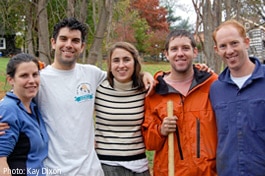
Hopefully, Mayfly Club members can also help educate others and so begin the process of restoring our fresh water ecosystems. It’s an opportunity for us to begin the reversal of all our negative habits before we reach a “tipping point.”
What’s in the Name — the Mayfly Club?
At one time, species of mayflies could be found in every body of fresh water around the world. They’re an amazing indicator of the health of freshwater ecosystems, including our streams and rivers, because of their sensitivity to pollution.
As the aquatic equivalent of the “canary in a coal mine,” mayflies sound the alarm of pollution by their absence or declining numbers. Because of that, they’ve become a sort of mascot for the Stroud Water Research Center. This remarkable insect is symbolic of what we hope our freshwater research and education efforts and the Mayfly Club will ultimately yield — healthier freshwater ecosystems and the return of mayflies to every body of fresh water around the world.
What Are Your Hopes for the Mayfly Club?
The idea was to host various events throughout the year – a stream walk, cocktail party, tree planting or lecture — simply to start the conversation about, and increase awareness of, freshwater issues. So far this year, we’ve had successful events in Philadelphia, New York City, and Northeast Harbor, ME — but the most exciting thing for me is to see people getting involved and becoming as interested and committed as we are. I want to see more of that.
It’s sometimes difficult to conceptualize how we can make a difference when I look at water issues from a global perspective, but one thing the Stroud Water Research Center has demonstrated to me is the power of our collective actions. By starting locally — even if we simply start with ourselves — we can make a difference, because each of our little actions can add up to a big solution. So, the more people who help the Mayfly Club realize its goals of building awareness and stewardship, the better off we’ll all be.
When one looks at the overall issues of fresh water, we’re all in this together.
It can, and should be, a unifying cause that has the support of everybody. Because “we all live downstream” it’s in everyone’s best interest to protect and preserve our freshwater resources. As a group, I think the Mayfly Club can do a lot to underscore that fact.
What Have You Learned by Being Part of This Organization?
I’m learning all the time — but just recently we hosted a terrific event at the Harvard Club in NYC, at which our guest speaker was Flip Nicklin, an authority on whales, co-founder of the Whale Trust, and a truly amazing photographer. He connected the dots between our polluted streams and rivers and the increase of “dead zones” in the ocean. Dead zones are vast areas where there is virtually no oxygen and life is unsustainable. Nicklin said that he’s far less worried about whales becoming extinct from hunting than from the threats to their food systems and the decline of their habitats, caused by our polluted rivers and the expansion of these dead zones.
It’s hard to imagine being able to build a groundswell of support for the plankton and krill that whales need to survive — but let’s also remember that much of the world’s population also relies on the protein harvested from our oceans. When we foul our fresh waters, we’re also destroying our oceans and the creatures large and small that inhabit them, and we’re putting at risk the food supply not just for whales, but for ourselves.
When I see the impact that a presentation like Nicklin’s has made on me and my friends — it makes me realize just how much potential there is to do good with this Club. Imagine being able to reach and influence hundreds of people who can contribute to addressing these issues. If you consider that, it’s pretty amazing to think about what we can accomplish.
How Would You Like People to Respond to This Article?
I hope that they will feel empowered. I want people to feel like they can contribute to making this a better world because it is within our power to do that.
If after reading this article, a few more individuals shift their mindset so that water is no longer just an afterthought, I’ll be happy and we’ll have done a lot of good. Maybe today some of you will take a shorter shower, refuse the bottled water at a restaurant and in the grocery store, or turn off the tap while you are brushing your teeth. Those small changes do add up.
I hope it will cause some people to be strong proponents for the Center’s research, and that they’ll champion the legislative changes needed to protect, preserve and restore our streams and rivers and our freshwater infrastructure.
Finally, I’d love to have them join us so we can all do this together.
In the News
How Safe is Your Water?
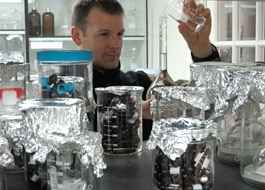
Just how safe is your drinking water? Health reporter, Hiran Ratnayake of The News Journal wanted to know so he visited the Stroud™ Water Research Center and spoke to research scientist, Anthony Aufdenkampe, to gain some insight.
His story, For Drinking Water, Safe Doesn’t Mean Pure, was published on November 4, 2008.
The Schuylkill River Watershed
The Reading Eagle newspaper’s multimedia story about the Schuylkill River watershed, entitled, A River Runs Through It, provides an overview of the watershed’s history and efforts to restore it. In this multipart series, Stroud Water Research Center research scientist John Jackson, explains that the “watershed has a history of intense use,” and references the Stroud Center’s research findings based on more than a decade of study on every stream and tributary within the watershed.
Read more about Jackson’s Schuylkill research
Stroud Scientists and Educators Present
Disseminating Our Findings to our Peers and the Public at Large
Our ability to disseminate our findings to a broad audience allows us to increase awareness and create a public dialogue centered on the protection, preservation and restoration of watersheds everywhere. It’s for that reason that our scientists and educators engage in both scientific and public forums to share their findings. The following highlights recent presentations.
Investing in Clean Water: The Role of Streamside Forests
Bern Sweeney, senior research scientist and director of the Stroud™ Water Research Center, presented Investing in Clean Water: What do Streamside Trees Have to do with Water Quality? to policy makers and the public in both Leesport and Conshohocken, Pennsylvania at the Berks County Agricultural Center and Montgomery County Fire Academy in October.
Sweeney’s presentations, based on research by the Center, focused on the planting of trees as a cost-effective way to protect our drinking water supply. These lectures, part of a larger program funded by William Penn Foundation and focused on the Schuylkill River watershed, are designed to educate public officials about how to craft municipal ordinances to ensure better protection of their freshwater resources.
In addition, as part of a Stream and Buffer Ecology Workshop sponsored by the PA Bureau of Forestry, Chesapeake Bay Foundation & PA Department of Conservation on October 29th, Sweeney discussed the Center’s buffer research findings and provided a helpful resource list to assist attendees in moving forward on their own plans to plant streamside forests. Among the attendees were representatives from the Department of Environmental Protection, Board of Fisheries, Natural Resources Conservation Service, Pennsylvania Association for Sustainable Agriculture, Pennsylvania Builders Association, and the Pennsylvania Farm Bureau.
Stroud education programs manager, Kristen Travers, addressed the 6th Annual, Lebanon/Lancaster County Watershed Forum in Quentin, Pennsylvania on October 25th, with her presentation, The Benefits of Streamside Forests and Their Relationship to Water Quality. Research demonstrates that forested streams are healthier and in a better position to help process contaminants that do enter our streams. Forested streams reduce flooding, create habitat for wildlife and save taxpayers money by reducing the requirements for treatment and filtration.
Learn more about the benefits of streamside forests
The Role of Tropical Rivers in Regional and Global Carbon Budgets
Stroud scientist Anthony Aufdenkampe, presented The Role of Tropical Rivers in Regional and Global Carbon Budgets on September 17th to an audience of faculty and graduate students from University of Pennsylvania’s Department of Biology. Aufdenkampe reviewed his work to date in the Amazon and shared preliminary results of a three-year collaborative study that explores the role of extreme flood events during La Niña in burying — and thus preventing from entering the atmosphere — globally significant quantities of carbon.