
Streamside Forests
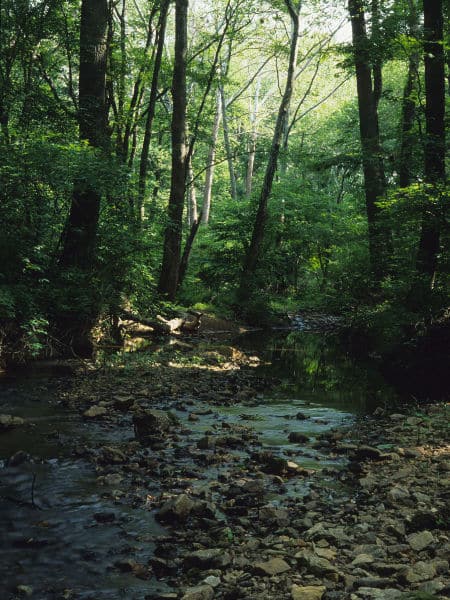
Photo: David H. Funk
Since 1982, Stroud Water Research Center employees and volunteers have helped plant hundreds of thousands of trees in Pennsylvania, beautifying the landscape while restoring and preserving water quality. Every tree we plant plays a vital role by providing a natural buffer zone between our land use and the stream it protects. Each tree helps prevent pollutants from entering our water supplies and provides lasting benefits of shade, beauty, and the natural habitat essential to a healthy ecosystem.
Streamside Forests
The Natural, Cost-Effective Solution for Clean Water
Streams Provide Drinking Water
Streams provide much more than places for recreation; they provide habitat for plants and animals — and the drinking water for many of us.
Trees Make Streams Healthier
Pennsylvania — or Penn’s Woods, as it was called — was almost completely forested for thousands of years. Today, many streams no longer have trees growing along their banks. The absence of these streamside forests, combined with poor land use, has resulted in declining stream health.
Plant Trees for Cleaner Water, Naturally
Unhealthy streams mean poor water quality, which increases the amount of money we must spend to treat our water supplies. A simple and cost-effective way to protect and improve the quality of our streams — and our drinking water — is to restore trees along waterways.
Streamside Forests = Healthier Wildlife Habitat
Streamside forests are important habitat areas for wildlife. These forests maintain the stream conditions that aquatic animals and plants need to thrive.
Shade from streamside forests keeps water temperatures cool — a necessity for brook trout, the state fish of Pennsylvania.
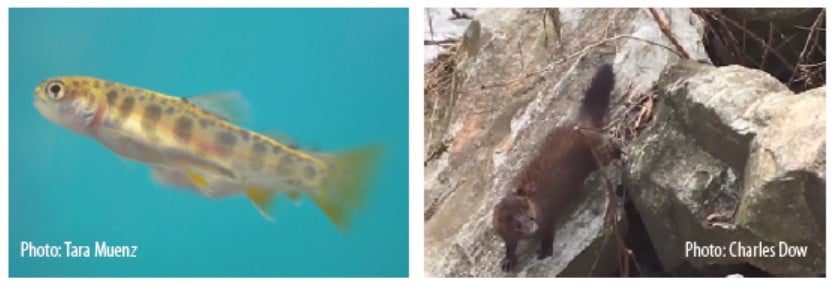
Streamside forests are important habitat areas for mink, which prefer to live in forested areas near water.
Tree leaves provide food and habitat for many aquatic animals, such as insects and crustaceans, which in turn provide food for fish.
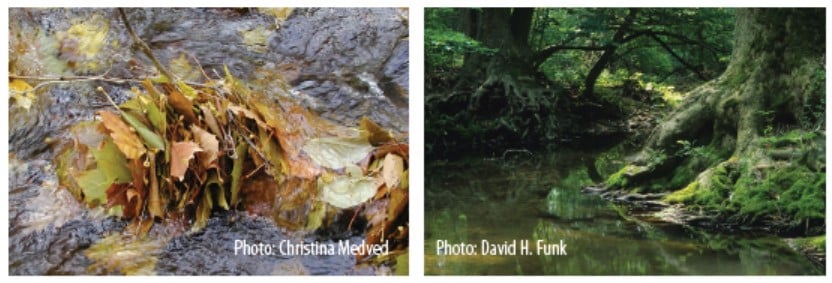
Tree roots stabilize streambanks and reduce erosion. They also create habitat for animals.

Streamside Forests and Water Quality
Trees Reduce Pollution
Streamside forests reduce the amount of sediments that reach streams and help them to better process the pollution that does enter them. Healthy, forested streams are full of life, including microscopic organisms that are efficient at breaking down pollutants. Planting trees along streams supports a rich variety of life that can continue to clean our water for us, naturally.
Trees Reduce Flooding
Forests function like sponges. Roots from trees and shrubs break up the soil so that rainwater soaks into the ground, rather than running off the surface. This helps reduce flooding and replenish groundwater, another important source of drinking water.
Trees Decrease Drinking-Water Costs
Poor water quality costs taxpayers money. Streamside forests reduce the cost of clean drinking water by reducing the need for chemicals to treat the water.
Streamside Forests = Cleaner, Cheaper Water
A 10% increase in forest cover in the area of a drinking-water source results in a 20% decrease in treatment and chemical costs.
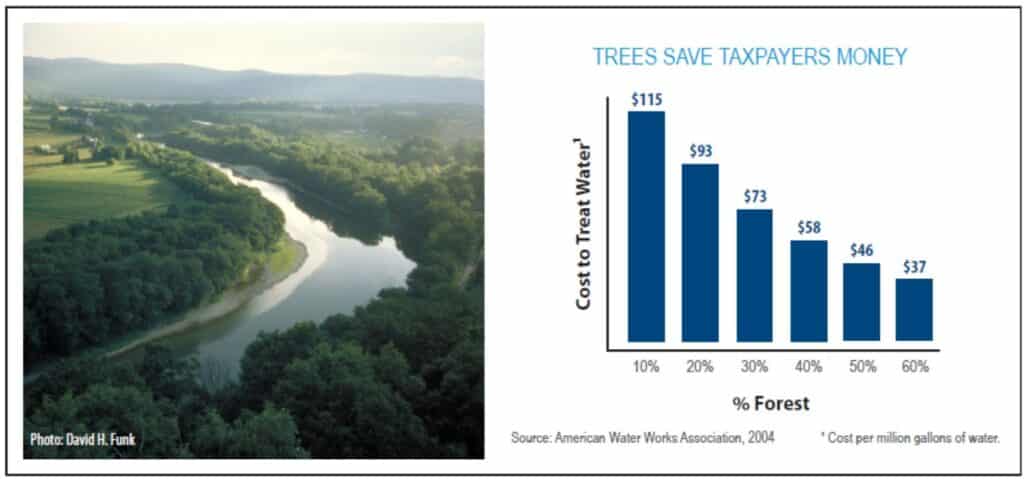
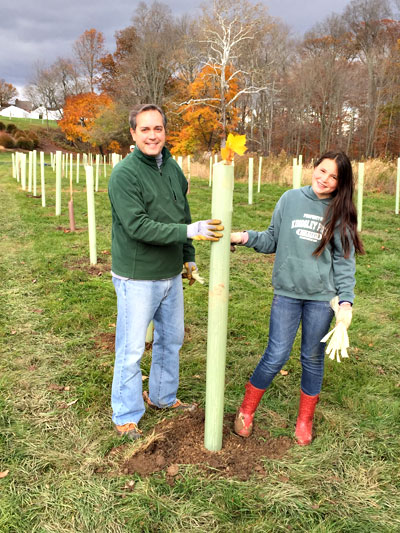
Photo: Kristine Lisi
Plant Trees and Become Part of the Solution
Start With a Tree
Plant trees on your property even if you don’t have a stream. Tree roots break up the soil and allow rainwater to infiltrate into the ground, which helps replenish groundwater and reduce flooding.
Plant Native Species
Plant native trees and shrubs. Native plants will thrive in our climate, are easier to care for, and provide excellent food and habitat for wildlife.
Remember, Wider is Better
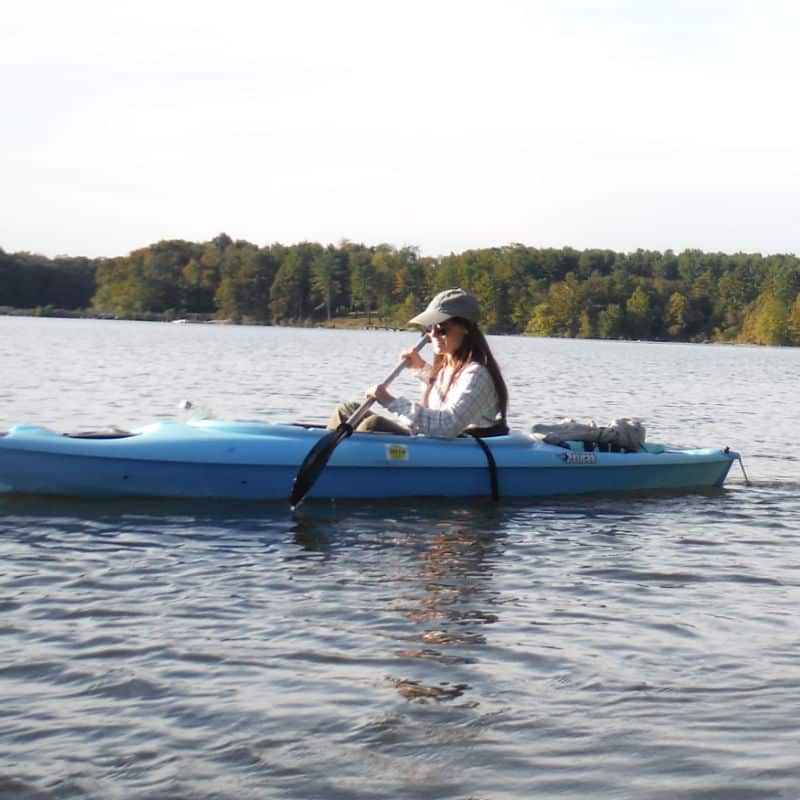
Streamside forests provide a setback — or buffer — between the stream and the adjacent land use. A narrow streamside forest can provide some benefits, such as shade, but wider buffers are necessary to keep streams healthy. Research findings support a 100-foot minimum on both sides of the stream.
Why Streamside Forests?
Six Reasons to Plant Trees
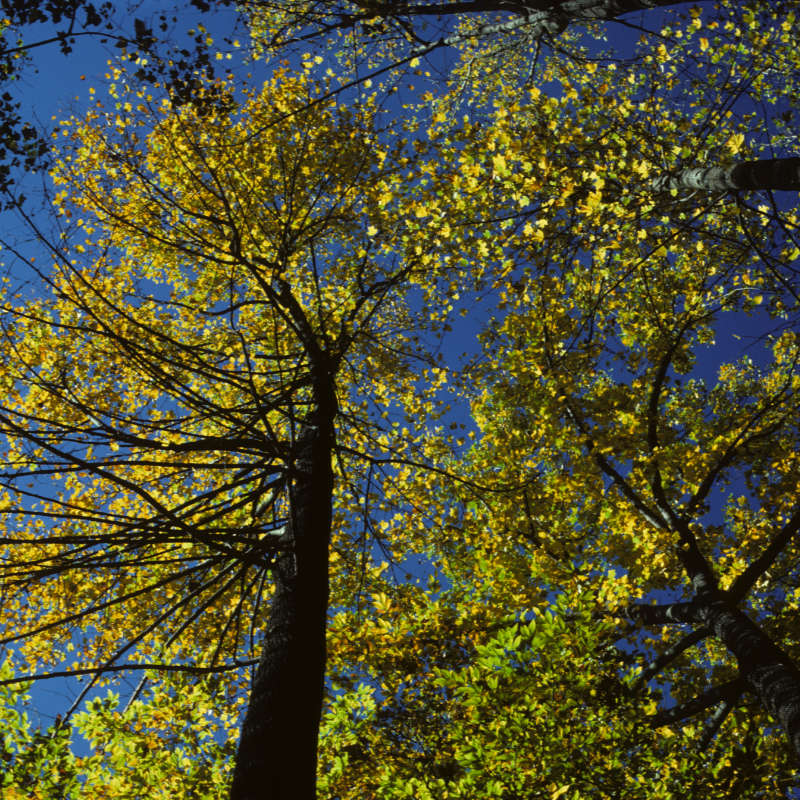
- Improve water quality by reducing pollution.
- Lower drinking-water treatment costs.
- Replenish groundwater supplies.
- Reduce flooding.
- Provide habitat for wildlife.
- Increase property values.
Take Action
- Donate to help us plant more trees for clean fresh water.
- Share this page on social media or download and share the PDF version.
- View our watershed restoration resources, including the list of native trees and shrubs recommended for streamside forests.
Funded by William Penn Foundation